
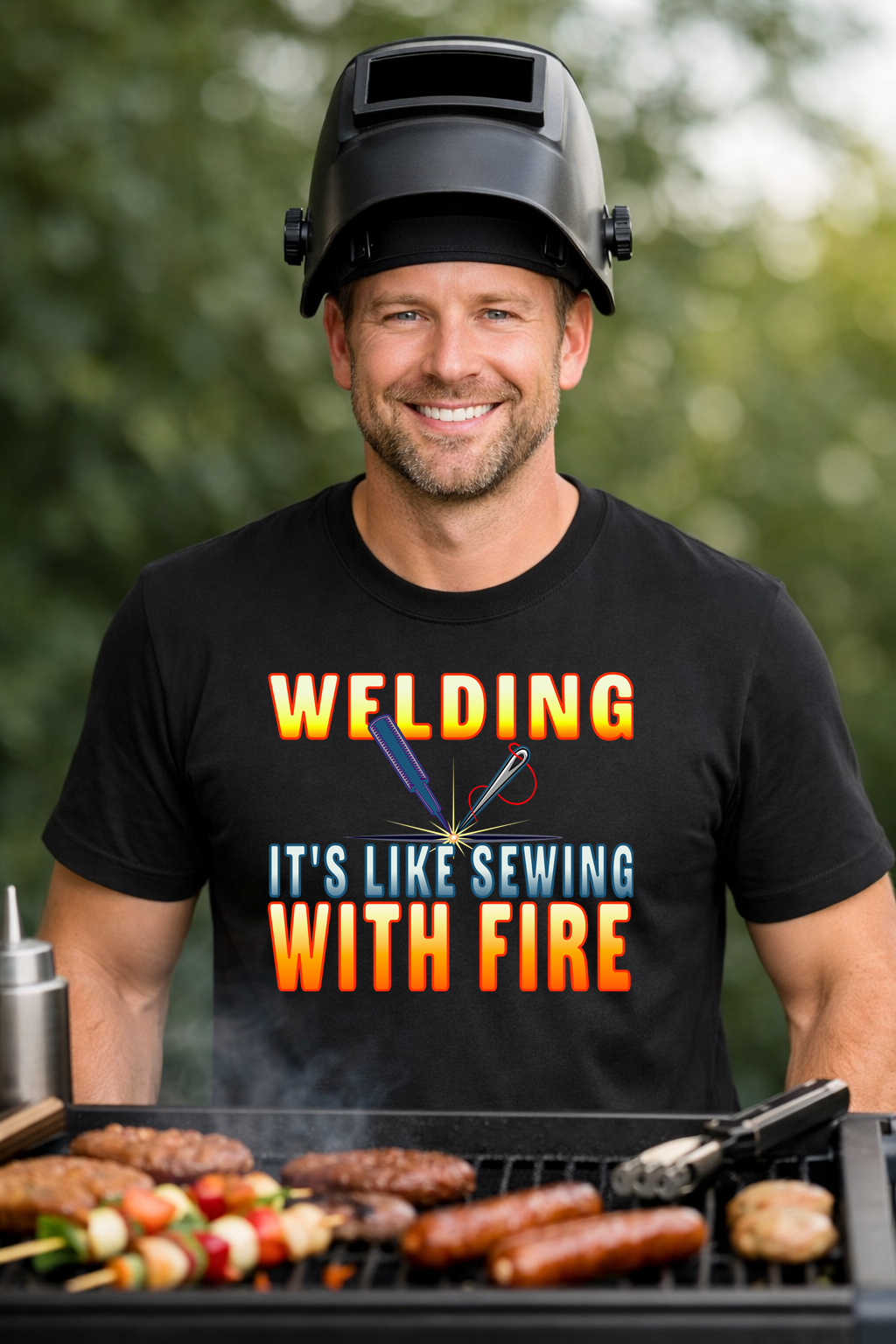
Here’s a statement that’ll probably earn some eye-rolls from both welders and seamstresses: welding is basically high-temperature sewing. Before you close this tab, hear me out. Strip away the sparks and the fabric, and you’re left with two crafts that demand the same core skills—precision, technique, and an obsessive attention to how two pieces become one.
The comparison sounds ridiculous until you actually look at what both crafts require. Then it starts making a weird kind of sense.
The Precision Game
Ask a welder what separates amateur work from professional work, and they’ll probably talk about consistency. Every bead needs to look like the one before it. The penetration has to be just right—too shallow and the joint fails, too deep and you burn through. Sound familiar? Sewers deal with the same pressure. Stitch length, seam allowance, tension—one little slip and the whole piece falls apart.
Both crafts live in millimeters. A welder working on structural steel can’t afford a gap. A tailor working on a wedding dress can’t afford puckering. Different materials, same standard: perfection or start over.
The tools look nothing alike, obviously. But the hand-eye coordination? Nearly identical. Welders guide a torch along a seam the same way sewers guide fabric under a needle—smooth, steady, and with enough focus that the rest of the world disappears for a while.
It’s All About Control
Welding involves managing heat input, travel speed, and wire feed rate—all at once, all while watching a molten pool that changes by the second. Screw up any one of those variables and you get porosity, slag inclusion, or a bead that looks like it was done by someone’s cousin who „knows how to weld.”
Sewing? Same concept, different variables. Thread tension, presser foot pressure, fabric feed—every adjustment matters. Too much tension and the seam puckers. Too little and it’s loose enough to fail under stress. The materials might not glow orange, but the principle is identical: control multiple moving parts simultaneously or accept subpar results.
Both crafts also share an annoying truth: you can’t fake competence. Bad welds fail inspections. Bad seams fall apart in the wash. There’s no room for „close enough” when the work actually has to hold.
The Art of the Seam
This is where it gets interesting. Welders don’t just make joints—they make *good-looking* joints. A clean bead isn’t just functional; it’s a point of pride. You can tell an experienced welder by the consistency of their work, the way each pass looks intentional. It’s not just about strength. It’s about aesthetics.
Same with sewing. A functional seam is one thing. A seam that’s straight, even, and invisible from the outside? That’s craftsmanship. Both trades reward the people who care about how the work looks, not just whether it technically works.
There’s also the problem-solving element. Neither craft follows a script. Welders adapt to warped metal, tricky angles, and materials that don’t want to cooperate. Sewers adapt to fabric that stretches, patterns that don’t quite fit, and clients who changed their minds halfway through. Both require the ability to think on your feet and fix problems as they show up.
The Craftsperson Mindset
Talk to someone who’s been welding for twenty years, and you’ll notice something: they see the world differently. They notice bad welds on railings. They critique structural work from across the street. It’s not snobbery—it’s pattern recognition. You spend enough time doing something at a high level, and you start seeing the details everywhere.
Sewers do the same thing. They notice crooked hems on expensive clothes. They check how garments are constructed before they buy them. Once you know how something *should* be done, it’s hard to unsee when it’s done poorly.
Both crafts also attract people who’d rather work with their hands than sit in meetings. There’s a satisfaction in finishing something tangible—a weld that holds, a garment that fits—that’s hard to replicate in other kinds of work. The people who stick with these trades tend to value autonomy, quality, and the quiet pride of knowing they did it right.
Where the Comparison Falls Apart
Okay, so they’re not *exactly* the same. Welding involves molten metal at a few thousand degrees. Sewing involves thread and fabric at room temperature. The safety gear is slightly different—welders wear helmets and leather, sewers worry more about needle injuries than arc flash.
The work environments aren’t interchangeable either. Welders deal with fumes, sparks, and the kind of heat that makes summer in a shop miserable. Sewers work in quieter spaces, though anyone who’s spent eight hours at a machine knows it’s not exactly relaxing.
But strip away the surface-level differences, and you’re left with two precision-based joining trades that demand the same core competencies. The tools might look different, but the skills? Surprisingly similar.
Why This Matters
There’s a tendency to put skilled trades into boxes. Welding is „tough” work. Sewing is „delicate” work. But spend time around people who actually do these jobs, and the stereotypes fall apart pretty fast. Both require strength—physical and mental. Both require patience. Both reward obsessive attention to detail.
The comparison isn’t meant to diminish either craft. It’s meant to highlight what they share: respect for precision, pride in quality work, and a mindset that refuses to accept „good enough.” Those values transcend the materials involved.
It’s also a reminder that the best craftspeople see connections others miss. They understand that mastery in one area often translates to understanding another. A welder who respects the precision of sewing isn’t weakening their trade—they’re acknowledging that skill is skill, regardless of whether it glows orange or not.
Next time someone makes the „welding is like sewing with fire” joke, maybe don’t roll your eyes. There’s a version of that idea that actually holds up under scrutiny. And honestly? The welders who get it are usually the ones whose beads look the best.